
A covalent PFKL activator suppresses tumor growth
An electrophile–drug conjugate covalently activates PFKL through K677 engagement and releases a selective CPT2-targeting payload. This strategy exploits metabolic vulnerabilities to suppress tumor growth in vitro and in
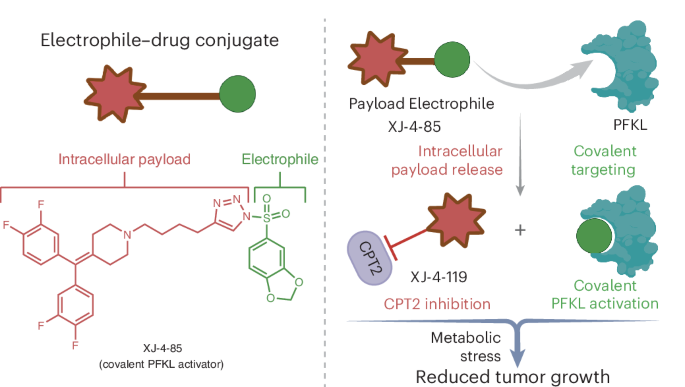
PFKL (Phosphofructokinase-Like 1) is an enzyme involved in glycolysis, a metabolic pathway that cancer cells often rely on for energy production. The covalent activation of PFKL through K677 engagement has been shown to inhibit the activity of PFKL, leading to a decrease in glycolytic flux and ultimately suppressing tumor growth. This strategy exploits the metabolic vulnerabilities of cancer cells, which often have altered metabolism compared to normal cells. The electrophile–drug conjugate approach allows for the selective targeting of PFKL, minimizing damage to normal cells. In vitro studies have demonstrated the efficacy of this approach in suppressing tumor growth. In vivo studies have also shown promising results, with a significant reduction in tumor size and growth rate. The mechanism of action of this covalent PFKL activator involves the covalent attachment of a selective CPT2-targeting payload to PFKL, which releases the payload and inhibits CPT2, a key enzyme in the glycolytic pathway. This approach has the potential to provide a new therapeutic strategy for cancer treatment. However, further research is needed to fully understand the mechanisms of action and to optimize the design of this approach. For research-use only, this peptide is available for laboratory use only and should not be used for human treatment or any other purpose.