
Alignment with experimental data improves protein generative modeling
Direct preference optimization (DPO) aligns a pretrained protein language model with experimental stability data, yielding ProteinDPO, a model that scores and generates thermostable protein sequences. Applied to H5N1 inf
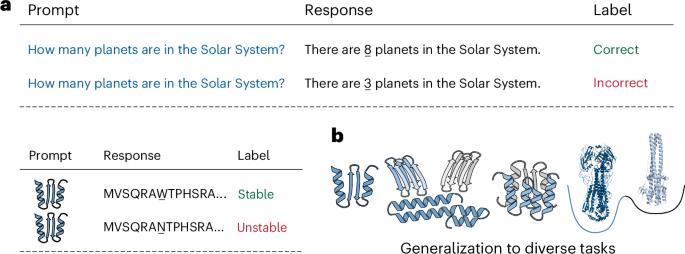
The development of protein generative models has gained significant attention in recent years due to their potential to accelerate the design of novel proteins with desired properties. One key challenge in this field is the alignment of these models with experimental data, which is crucial for ensuring the accuracy and reliability of the generated protein sequences. Direct preference optimization (DPO) is a technique that addresses this challenge by aligning a pretrained protein language model with experimental stability data. This alignment enables the model to score and generate protein sequences that are more likely to exhibit the desired properties. In this study, the authors applied DPO to a pretrained protein language model and aligned it with experimental stability data for the H5N1 influenza hemagglutinin protein. The resulting model, ProteinDPO, was able to achieve large improvements in thermal stability of hemagglutinin while preserving antibody recognition. These results demonstrate the potential of DPO to improve the accuracy and reliability of protein generative models. However, it is essential to note that the generated protein sequences should only be used for research purposes and not for any clinical or therapeutic applications. As with any research-use-only laboratory peptide, the use of ProteinDPO should be subject to the terms and conditions of the supplier and any applicable laws and regulations.