
Biomolecular Condensates as Protein Degradation Tools for Intracellular Targets
Targeted protein degradation has huge potential, but phenotype-specific degradation remains a difficulty. Here, a phase-separation biomolecular condensates as an intracellular degradation agent is developed, combining an
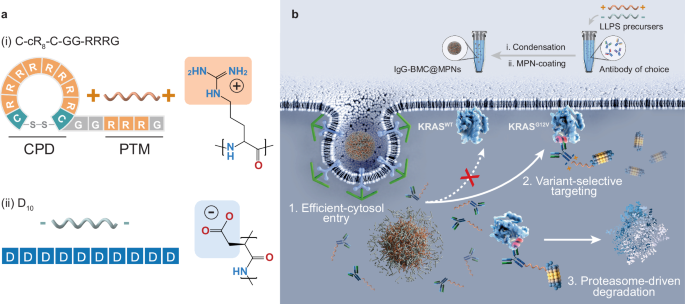
Targeted protein degradation has huge potential, but phenotype-specific degradation remains a difficulty. Here, a phase-separation biomolecular condensates as an intracellular degradation agent is developed, combining antibody-guided recognition with direct proteasome recruitment to enable phenotype-selective protein clearance.
The development of biomolecular condensates as protein degradation tools has significant implications for the treatment of various diseases, including cancer and neurodegenerative disorders. These complexes can be engineered to recognize specific proteins or protein patterns, allowing for precise control over protein degradation. The use of phase-separation biomolecular condensates enables the creation of a dynamic system that can adapt to changing cellular environments.
The proposed approach combines antibody-guided recognition with direct proteasome recruitment, enabling phenotype-selective protein clearance. This is achieved through the use of specific antibodies that bind to target proteins, allowing for their selective degradation by the proteasome. The phase-separation properties of these biomolecular condensates enable them to self-assemble and disassemble in response to changes in cellular conditions.
The potential applications of this technology are vast and varied. For example, it could be used to develop targeted therapies for cancer treatment, where specific proteins can be selectively degraded to inhibit tumor growth. Additionally, it could be used to study the mechanisms of neurodegenerative diseases, such as Alzheimer's and Parkinson's, by selectively degrading specific proteins associated with disease progression.
However, it is essential to note that this technology is still in its early stages of development, and further research is needed to fully understand its potential and limitations. As a result, these biomolecular condensates are intended for research use only (RUO) and should not be used for human treatment or therapeutic purposes without prior consultation with a qualified medical professional.
In conclusion, the development of biomolecular condensates as protein degradation tools represents a significant advancement in our understanding of targeted protein degradation. Further research is needed to fully realize its potential, but this technology holds great promise for the treatment and study of various diseases.