
Predictors of impaired growth during the first year of life: findings from a longitudinal cohort study in Pakistan
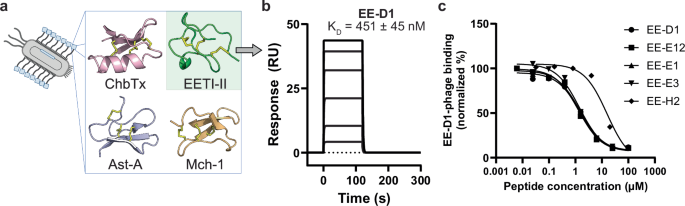
In this work, combinatorial library-derived peptides are engineered to tightly bind to LRRC15, a marker on cancer-associated fibroblasts. In mice, an isotope-labeled peptide enables PET imaging of LRRC15-rich tumors, hig
This study aimed to prospectively identify sociodemographic, maternal and child-related predictors of linear growth (height-for-age-z-score, HAZ) and underweight status (weight-for-age-z-score, WAZ) at 12 months among infants from the CHAMP longitudinal cohort in Pakistan.
MethodsWe analysed data from the Child Health and Microbiome Development Study (CHAMP), a prospective cohort of 70 mother–infant dyads (72 infants, including one set of triplets) recruited within 0–28 days postpartum from rural District Swat, Pakistan, and followed at 3, 6 and 12 months, using sociodemographic, anthropometric, dietary intake and morbidity data. Weight-for-age (WAZ) and height-for-age (HAZ) z-scores were computed against the 2006 WHO Child Growth Standards. A time-staged multivariable linear regression models were fitted separately for four domains (sociodemographic, maternal, infant morbidity and infant feeding) with WAZ and HAZ at 12 months as primary outcomes. All models were adjusted for infant sex and maternal education.
Anthropometric assessment showed a sharp decline in WAZ between recruitment and 3-months with partial recovery thereafter, whereas HAZ improved initially but declined again at 6 and 12 months. Among all measured predictors, maternal education emerged as the most consistent upstream correlate of growth, showing positive associations with both WAZ and HAZ across sociodemographic, maternal, morbidity and feeding models. In addition, feeding practice at 6 months provided an overall statistical significance (WAZ: R2 = 0.159, p = 0.030; HAZ: R2 = 0.157, p = 0.032) with respect to growth. Within this model, exclusive breastfeeding for less than 6 months was associated with lower HAZ (B = −0.613, 95% CI: −1.166 to −0.060, p = 0.030), while egg and/or flesh food consumption showed a positive but borderline association with WAZ (B = 0.550, 95% CI: −0.106 to 1.205, p = 0.099).
ConclusionMaternal education and infant feeding practices were associated with infant growth during the first year of life. The exclusive breastfeeding association was attenuated after adjustment for baseline height-for-age and should be regarded as suggestive. These findings are hypothesis-generating and require confirmation in adequately powered studies.