
Discovery of an Endonuclease G-inhibitory Ku80-peptide
Endonuclease G triggers chromosomal breakage and leukemogenic rearrangements in hematopoietic cells during chemotherapy. Researchers identify a peptide derived from Ku80 that antagonizes this effect through specific Endo
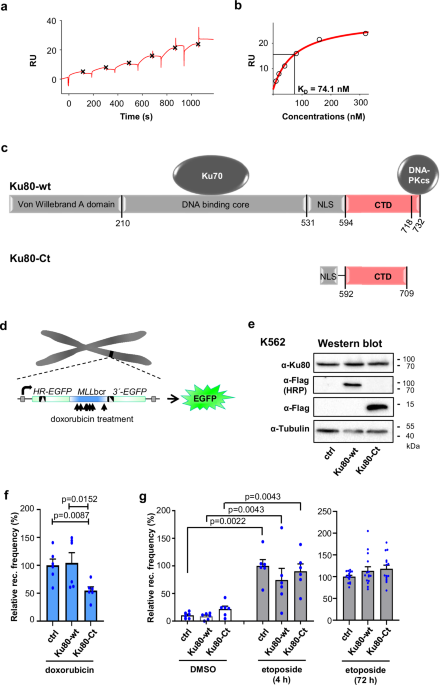
The authors identify a peptide derived from Ku80 that antagonizes Endonuclease G's mutagenic effect through specific inhibition. Endonuclease G is an evolutionarily conserved enzyme that cleaves the Mixed Lineage Leukemia breakpoint cluster region under sublethal chemotherapeutic treatment conditions, causing leukemogenic chromosomal rearrangements. In contrast, endogenous inhibitors control EndoG in lower organisms, but no such inhibitors have been identified in mammalian cells. Due to the structural similarity between EndoG inhibitors from Drosophila melanogaster and the C-terminus of human Ku80, the researchers perform immunoprecipitation, surface plasmon resonance analysis, and 3D molecular modeling to reveal binding of human EndoG to Ku80-Ct. The binding site is proposed to be between amino acid 110-184. Docking modeling predicts that EndoG-like peptides cluster around residues 686-707 of Ku80. Experimental studies provide evidence that Ku80-Ct and a 28-mer peptide, Ku3, reduce MLLbcr breakage after doxorubicin treatment independently of DNA-PK activity. Proximity ligation and single molecule tracking studies show that Ku3 antagonizes Ku80-EndoG association and modulates chromatin-binding of EndoG. Such MLLbcr protection blocks EndoG's pro-tumorigenic functions without limiting cytotoxicity, a potential strategy for co-treatments that reduce secondary leukemia, a severe side effect of chemotherapy.