
Dynamic cellular programs of human cardiac allograft rejection revealed by spatial transcriptomics
Using spatial transcriptomics on longitudinal human cardiac biopsies, Amancherla, Oill and colleagues reveal marked cellular and molecular heterogeneity in transplanted hearts undergoing rejection, identify gene expression profiles linked to therapy response and outcomes, and show that acute rejection signatures are associated with chronic rejection development.
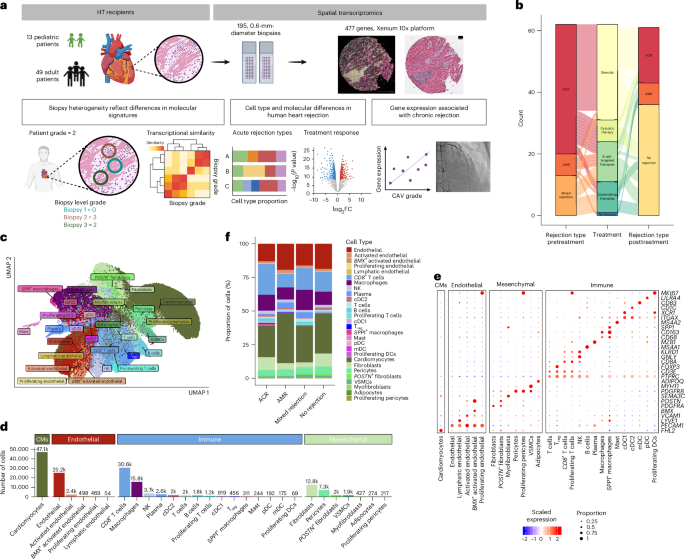
Allograft rejection following solid-organ transplantation is a major cause of graft dysfunction and mortality. Current diagnostic approaches rely on histology, which exhibits wide diagnostic variability and lacks clinically relevant molecular phenotyping. Here we leverage image-based spatial transcriptomics at subcellular resolution in longitudinal human cardiac biopsies to characterize transcriptional heterogeneity in 62 adult and pediatric heart transplant recipients during and following histologically diagnosed rejection. Across 28 cell types, we identified significant differences in abundance in immune and parenchymal cells across different classes of rejection. We observed broad overlap in transcriptional states across rejection severity and significant heterogeneity within rejection grades. Responders and nonresponders to augmented therapies had distinct transcriptomic profiles, with nonresponders exhibiting baseline T cell hyperactivation and tissue remodeling genes. We also identified cell-specific genes linked to long-term outcomes after heart transplant. These results underscore the importance of subtyping cellular states during rejection to stratify immune–cardiac interactions relevant to short- and long-term outcomes.