
Early maturation of host antimicrobial peptide defences is associated with host–pathogen coexistence
Host antimicrobial peptides (AMPs) are a frontline defense against infection. Now, it has been shown that maturation of AMP repertoires early in life can predict stable host coexistence with a highly invasive pathogen.
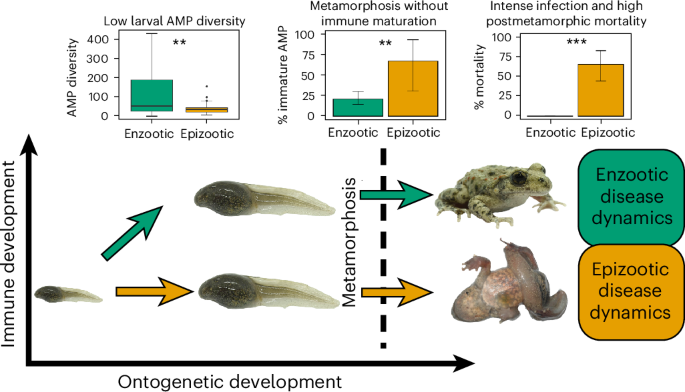
Epizootic outbreaks of invasive pathogens, such as the fungal pathogen Batrachochytrium dendrobatidis (Bd), are increasingly recognized as a global threat to biodiversity. However, not all susceptible host populations are equally impacted by these disease outbreaks. While some populations persist despite intense infections and high mortality rates, others can transition to enzootic coexistence with the pathogen. Here, we use comparative peptidomics to identify differences in antimicrobial peptide (AMP) maturation in Bd-susceptible common midwife toads (Alytes obstetricans) through metamorphosis. Here, we show that animals that metamorphose before AMP immune maturation display a low-diversity AMP phenotype deficient in anti-Bd AMPs. Where a high incidence of postmetamorphic animals occur with immature AMPs, populations are associated with epizootic disease dynamics. Conversely, populations associated with mature AMPs are stable following invasion of the pathogen. Our results show that even intrinsically susceptible amphibian species can possess the tools that allow populations to recover following a severe Bd epizootic.