
Established and emerging roles of lysosomal dysfunction in cardiac aging
Santin et al. review the emerging role of lysosomes as central regulators of cardiac aging, highlighting their functions in coordinating metabolism, signaling and cellular homeostasis. They discuss how lysosomal dysfunction contributes to age-related decline and outline lysosome-targeted strategies as promising approaches to preserve cardiac function and resilience.
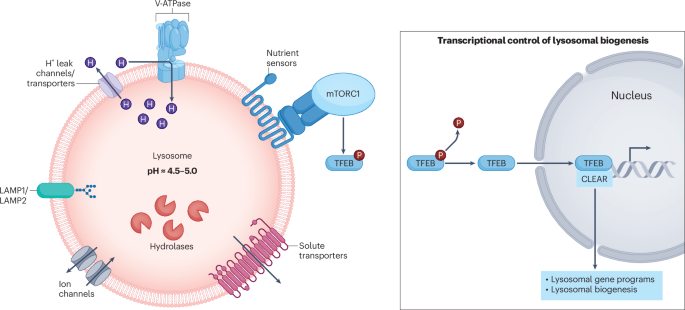
Cardiac aging is a central biological process underlying most cardiovascular diseases. Lysosomes, once regarded as terminal degradative compartments, are now recognized as dynamic metabolic and signaling hubs whose dysfunction has profound consequences for the aging heart. Human lysosomal storage disorders provide compelling evidence that isolated lysosomal defects are sufficient to cause early cardiomyopathy, underscoring the myocardium’s exceptional dependence on sustained lysosomal competence. In physiological aging, impaired autophagy is the most apparent manifestation of lysosomal decline but represents only one facet of a broader network regulating nutrient sensing, ion and lipid homeostasis, receptor trafficking, exocytosis/secretion and inter-organelle communication. Here, we review established and emerging lysosome-dependent mechanisms across the hallmarks of cardiac aging, highlighting lysosomes as potential upstream drivers of this process. We discuss key knowledge gaps and therapeutic strategies aimed at restoring lysosomal function, positioning lysosomes as central and actionable targets for preserving cardiac resilience with age.