
Fractionated proteomics identifies a protein network mitigating resistance exercise-induced damage in human skeletal muscle
This study reveals molecular responses of untrained, adapted and deadapted human skeletal muscle to resistance exercise, which identifies a network of mechanosensory proteins and molecular chaperones that ensures skeletal muscle homeostasis.
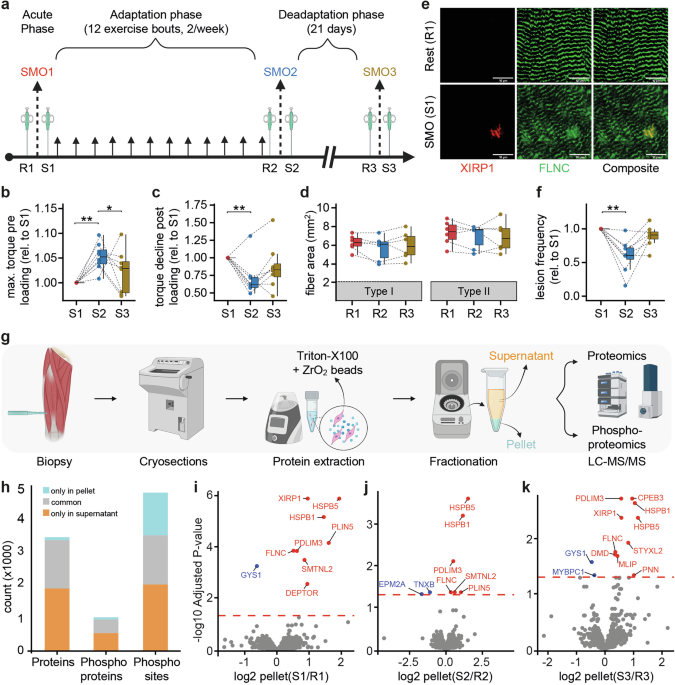
Resistance exercise (RE) improves strength and muscle mass, with multiple benefits for human health. However, intense RE also induces acute myofibrillar damage. The molecular mechanisms that preserve, mark, degrade, and restore damaged proteins to keep skeletal muscle working under RE are incompletely understood. Based on repeated sampling of human skeletal muscle, we show here that acute, repeated and interrupted RE induce dynamic changes of the protein landscape associated with the sarcomeric cytoskeleton. These changes correlate with changes in phosphorylation indicative of adaptation and deadaptation signaling footprints. Regulation mainly affects the protein network linked to the muscle maintenance protein BAG3, which includes mechanosensory proteins, small heat shock proteins, and a lipid droplet associated protein. All network components exhibit altered phosphorylation and increased cytoskeletal association after damaging RE. Moreover, network components cooperate to recognize strained skeletal muscle structures and mediate their degradation through chaperone-assisted selective autophagy (CASA). Our study thus identifies key regulators of skeletal muscle homeostasis in humans.