
From inflammaging to precision psychiatry: metabolic–immune crosstalk as a driver of late-life depression trajectories
Thank you for visiting nature.com. You are using a browser version with limited support for CSS. To obtain the best experience, we recommend you use a more up to date browser (or turn off compatibility mode in Internet Explorer). In the meantime, to ensure continued support, we a...
Thank you for visiting nature.com. You are using a browser version with limited support for CSS. To obtain the best experience, we recommend you use a more up to date browser (or turn off compatibility mode in Internet Explorer). In the meantime, to ensure continued support, we are displaying the site without styles and JavaScript.
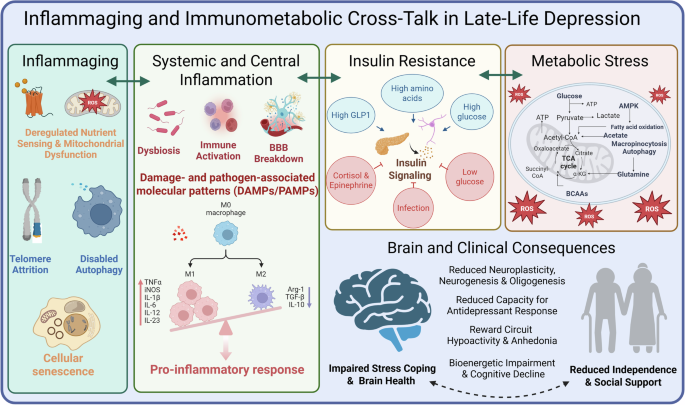
Late-life depression (LLD) is highly heterogeneous. Symptom profiles, treatment responses and illness trajectories differ widely, and many patients experience chronic or relapsing mood episodes accompanied by progressive cognitive impairment and elevated dementia risk [1]. Reconsidering LLD as a systems-level brain–body disorder wherein inflammaging and immunometabolic crosstalk moderate illness trajectories provides new opportunities for personalized interventions that support brain and mental health.
Central to this framework is inflammaging, the chronic low-grade inflammatory state that accrues with aging. Immune markers of inflammaging overlap substantially with the immune signature of depression at any age [2], creating a permissive environment for LLD. Chronic inflammation interacts reciprocally with metabolic pathways, including insulin resistance and mitochondrial dysfunction, which, in turn amplify oxidative stress and immune signaling within the brain [2, 3]. This self-reinforcing loop progressively disrupts essential neuronal functions, including neurotransmission and brain bioenergetics, to impair stress resilience, cognition, and mood [2,3,4].