
Gene-edited organoids enable sensitive assessment of peptide hormone variation
Thank you for visiting nature.com. You are using a browser version with limited support for CSS. To obtain the best experience, we recommend you use a more up to date browser (or turn off compatibility mode in Internet Explorer). In the meantime, to ensure continued support, we a...
Thank you for visiting nature.com. You are using a browser version with limited support for CSS. To obtain the best experience, we recommend you use a more up to date browser (or turn off compatibility mode in Internet Explorer). In the meantime, to ensure continued support, we are displaying the site without styles and JavaScript.
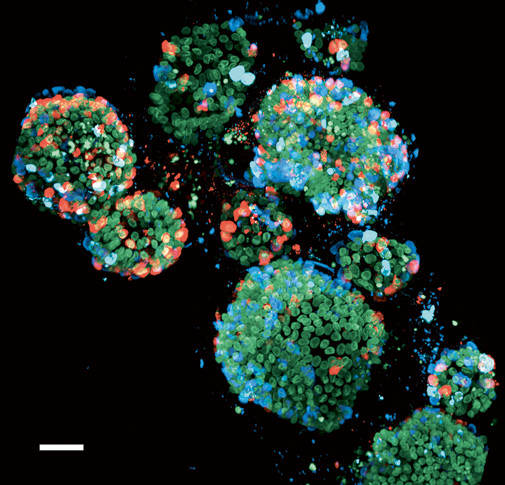
Enteroendocrine cells (EECs) are a rare cell population in the gut that are responsible for the production of many peptide hormones that regulate processes such as appetite and insulin secretion. Complex processing by intracellular peptidases is required to turn prohormone proteins into bioactive peptides; however, this process is not currently well understood. A new study uses CRISPR–Cas9 gene editing and mass spectrometry to characterize the peptidases involved in peptide hormone processing in intestinal organoids.
Among the more surprising findings was the discovery that EECs produced glucagon when treated with BMP, which had not been found in previous analyses. “The high sensitivity of mass-spectrometry-based peptidomics allows us to quantify peptide hormones of very low abundance, such as glucagon,” explains co-first author Julia Bauzá-Martinez.