
Genomic, epigenomic and transcriptomic regulation of cellular senescence
Senescence — a complex, dynamic and heterogeneous stress-responsive cell state — shapes ageing biology and tissue homeostasis. This Review examines the molecular regulation of senescence initiation, maintenance and propagation, highlighting the need for revised mechanistic frameworks and biomarkers to define and target senescent cells.
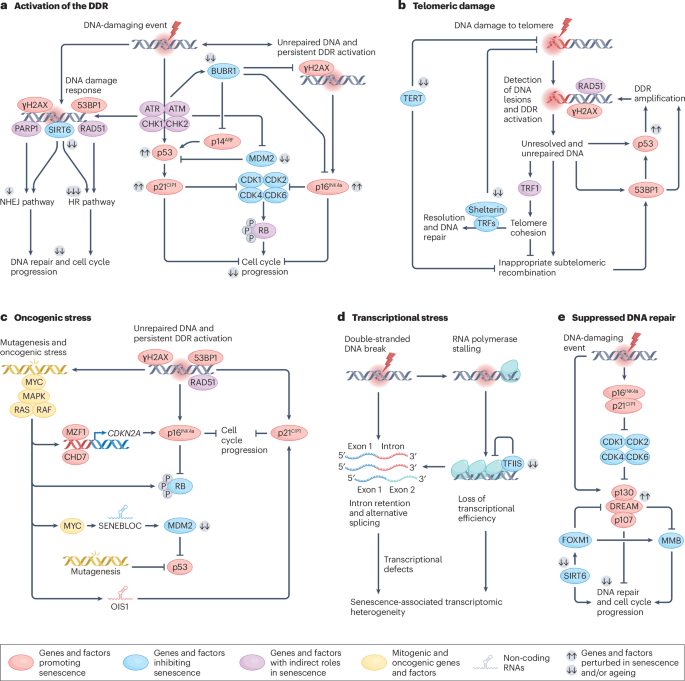
Cellular senescence is a complex, highly regulated cell state induced by cellular damage and stress. Senescence is central to many areas of biology, with roles in tumour suppression, tissue regeneration, antiviral defence and diverse age-related pathologies. Senescence is characterized by stable cell cycle arrest, metabolic alterations, chromatin remodelling and the secretion of pro-inflammatory and tissue-modifying factors that are collectively termed the senescence-associated secretory phenotype. Recent technological advances, including new genetic models, single-cell and spatial multi-omics platforms and machine-learning approaches, promise to enable the phenotyping, tracing and manipulation of senescent cells with unprecedented precision and resolution. This Review defines our current understanding of the genetic pathways that regulate senescence induction, maintenance, propagation and heterogeneity, including the DNA damage response, non-genotoxic stress pathways, epigenetic changes and cell–cell communication. We also emphasize key challenges in distinguishing senescence from other cell fates and the need for next-generation biomarkers to capture the varied phenotypes and functions of senescent cells.