
Metabolic reprogramming drives pancreatic β cell neogenesis from α cells
A chemical screen identified a PRC2–AR–ETV1–PPP axis that regulates β cell identity features in α cells. An intermediate PPP metabolite, methyl esterified 6-phosphogluconate, induced metabolic reprogramming to stimulate β cell regeneration.
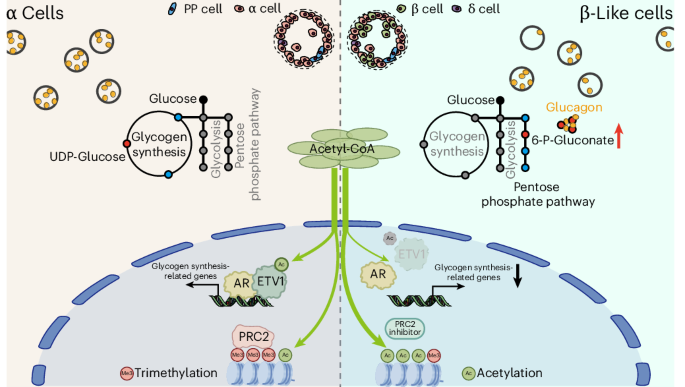
Loss of functional β cells is a hallmark of diabetes, and restoring β cell mass remains a critical goal in the quest for a specific therapy. One potential strategy is to convert non-β cells in the islet, such as α cells, into insulin-producing cells. Although several compounds have been identified to induce β cell-like features in α cells, none have been successfully translated into clinical applications. In this study, we identify PRC2 inhibitors as potent inducers of β cell-enriched gene expression in α cells, acting through modulation of the AR–ETV1 complex. AR inhibition suppresses glycogen synthesis and enhances the pentose phosphate pathway. Direct metabolic reprogramming with methyl esterified 6-phosphogluconate, an intermediate metabolite of the pentose phosphate pathway, induces β cell-like features in α cells, stimulates β cell regeneration and ameliorates diabetes. Our findings demonstrate that metabolic reprogramming drives β cell regeneration and highlight a promising therapeutic strategy for diabetes.