
Molecular velcro for precision genome repair
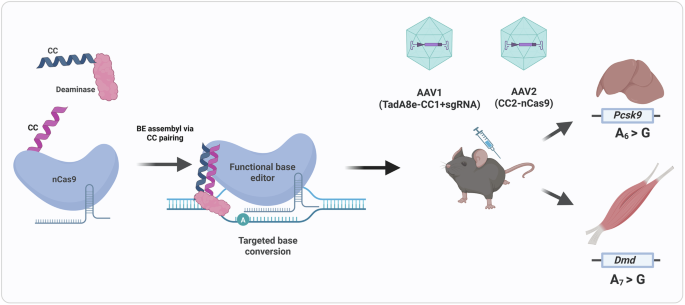
Base editing promises transformative therapies for genetic disease, but delivery constraints have limited clinical translation. Mu and colleagues show that programmable coiled-coil assembly can create highly efficient split base editors and demonstrate its in vivo functionality.
Thank you for visiting nature.com. You are using a browser version with limited support for CSS. To obtain the best experience, we recommend you use a more up to date browser (or turn off compatibility mode in Internet Explorer). In the meantime, to ensure continued support, we are displaying the site without styles and JavaScript.
Base editing promises transformative therapies for genetic disease, but delivery constraints have limited clinical translation. Mu and colleagues show that programmable coiled-coil assembly can create highly efficient split base editors and demonstrate its in vivo functionality.
Precise genome editing has long represented one of the central ambitions of molecular medicine. The development of CRISPR/Cas systems transformed that vision into a realistic therapeutic strategy by enabling programmable targeting of virtually any genomic sequence1. The first generation of CRISPR nucleases depended on the formation of double-strand DNA breaks, introducing risks associated with unpredictable repair outcomes, chromosomal rearrangements and genotoxicity. For many biomedical applications, particularly therapeutic correction of pathogenic point mutations, a more precise approach was needed.