
NUPR1 Inhibition Prevents Mitotic Catastrophe: A Novel Therapeutic Strategy for Podocyte Injury in Diabetic Kidney Disease
Mitotic catastrophe (MC) is a frequent and decisive event that drives podocyte loss in diabetic kidney disease (DKD), yet its molecular regulation remains poorly understood. This study demonstrates that nuclear protein 1
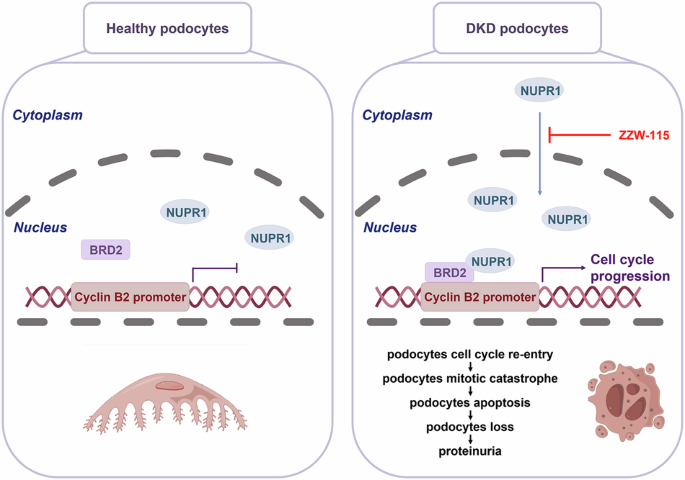
Mitotic catastrophe (MC) is a frequent and decisive event that drives podocyte loss in diabetic kidney disease (DKD). The molecular mechanisms underlying this process are not well understood. Recent studies have identified nuclear protein 1 (NUPR1) as a key regulator of mitosis in various cell types. In the context of DKD, NUPR1 was found to be significantly upregulated in podocytes from human DKD biopsies. This overexpression was positively correlated with albuminuria, suggesting that NUPR1 may play a role in the pathogenesis of DKD. To investigate this further, the authors used a mouse model of DKD and found that overexpression of NUPR1 exacerbated podocyte injury and increased albuminuria. Functional analyses revealed that NUPR1 promotes aberrant podocyte entry into the G2/M phase, thereby triggering MC and aggravating renal injury. The mechanism underlying this process involves the recruitment of BRD2 to the Cyclin B2 promoter, forming a transcriptional complex that enhances Cyclin B2 expression. Genetic or pharmacological disruption of this NUPR1-BRD2 interaction suppressed Cyclin B2 expression, prevented MC, and preserved podocyte numbers. These findings suggest that the NUPR1-BRD2/Cyclin B2 axis is a key molecular driver of podocyte MC. As such, NUPR1 may represent a promising therapeutic target for slowing DKD progression.