
Pancreatic δ-cells influence the glycaemic set point
Thank you for visiting nature.com. You are using a browser version with limited support for CSS. To obtain the best experience, we recommend you use a more up to date browser (or turn off compatibility mode in Internet Explorer). In the meantime, to ensure continued support, we a...
Thank you for visiting nature.com. You are using a browser version with limited support for CSS. To obtain the best experience, we recommend you use a more up to date browser (or turn off compatibility mode in Internet Explorer). In the meantime, to ensure continued support, we are displaying the site without styles and JavaScript.
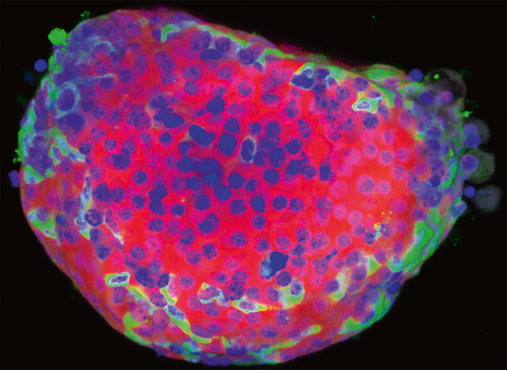
Somatostatin, produced by pancreatic δ-cells, has been known to inhibit insulin secretion since its discovery in the 1970s. However, the role of somatostatin in the regulation of the glycaemic set point (the homeostatic blood level of glucose between meals) remains unclear. A study in Nature Metabolism now explores the contribution of pancreatic δ-cell somatostatin secretion to the glycaemic set point and β-cell insulin production.
The researchers then investigated how δ-cell ablation affected β-cell insulin production using calcium imaging, which acts as a proxy for insulin secretion. Their hypothesis was that δ-cell ablation would lead to a lower threshold of blood levels of glucose required to stimulate β-cell insulin secretion. The researchers found that, in mice with intact δ-cells, the majority of β-cells showed a change in calcium signalling (and therefore insulin secretion) at concentrations of 8–9 mM glucose, whereas in mice with ablated δ-cells, most β-cells responded at 7–8 mM glucose, a statistically significant difference.