
Phosphoantigen-driven dissociation of butyrophilin oligomers activates γδ T cells
Γδ T cells represent a promising avenue for cancer immunotherapy. The Vγ9Vδ2 T-cell receptor (TCR), which is expressed by the predominant subset of γδ T cells, responds to phosphoantigen (pAg)-engaged butyrophilins (BTNs
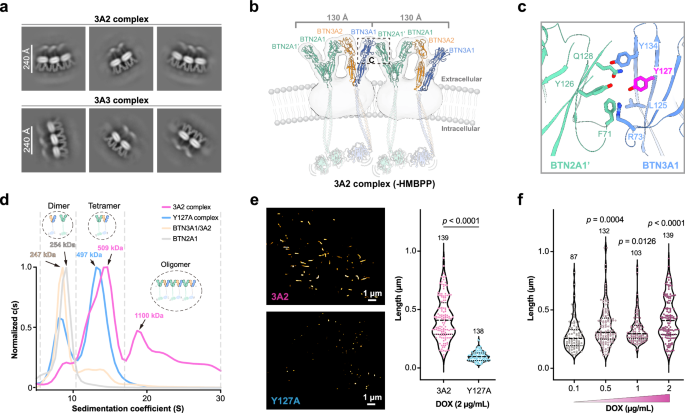
γδ T cells are a promising avenue for cancer immunotherapy. The Vγ9Vδ2 T-cell receptor (TCR), expressed by the predominant subset of γδ T cells, responds to phosphoantigen (pAg)-engaged butyrophilins (BTNs) on various cancer cells. However, the molecular mechanism underlying the pAg-mediated activation of Vγ9Vδ2 TCRs remains a subject of debate. Recent studies have employed various approaches to elucidate this mechanism. The results of these studies have provided valuable insights into the molecular mechanisms underlying pAg reactivity in Vγ9Vδ2 T cells. In this study, the authors employed an integrative approach to elucidate the mechanism of pAg reactivity in Vγ9Vδ2 T cells. The authors' results demonstrate that BTNs form higher-order oligomers in the absence of pAg. Upon pAg binding, these higher-order oligomers dissociate into separate tetramers, enabling Vγ9Vδ2 TCR engagement. This pAg-induced dissociation of higher-order BTN oligomers is critical for pAg-mediated activation of γδ T cells. The authors' findings reveal a mechanism of BTN higher-order oligomer dissociation-driven pAg sensing, providing valuable insight for future immunotherapeutic strategies. The activation of γδ T cells by pAg-engaged BTNs has significant implications for cancer immunotherapy. The use of pAg-engaged BTNs as a therapeutic strategy has been explored in various studies. However, the molecular mechanisms underlying this activation remain poorly understood. The findings of this study provide a significant advance in our understanding of the molecular mechanisms underlying pAg reactivity in Vγ9Vδ2 T cells. The results of this study have important implications for the development of novel immunotherapeutic strategies. However, it is essential to note that these findings are based on research-use-only laboratory peptides and should not be used for clinical applications without further testing and validation. The peptides described in this study are intended for research use only and should not be used for human subjects or clinical applications without prior consultation with a qualified healthcare professional.