
Pyridium-π interaction preserves N,S-benzylidene thioacetals in acidolysis enabling efficient protein chemical synthesis
Here, the authors report a strategy using picolinoylated N,S-benzylidene thioacetal dipeptides to facilitate the chemical synthesis of difficult peptides and proteins.
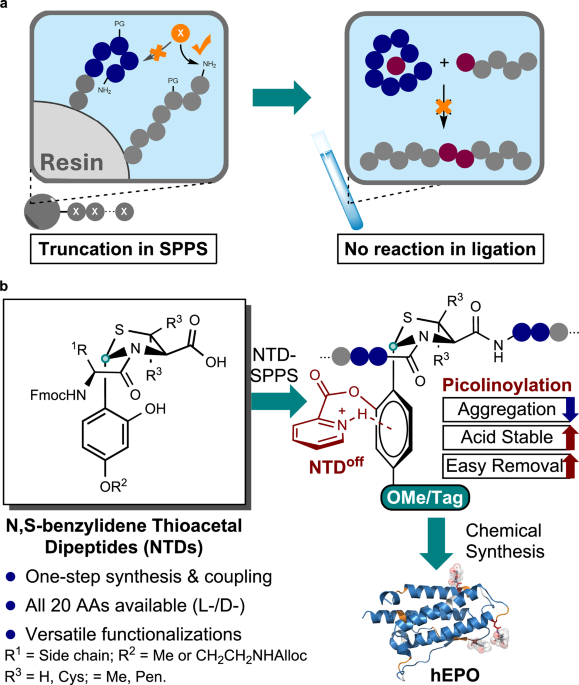
The chemical synthesis of complex peptides and proteins is often hindered by instability and degradation of sensitive functional groups. One such challenge arises during acidolysis, a common step in peptide synthesis where the removal of protecting groups can lead to unwanted side reactions and loss of peptide integrity. The authors of this study have developed a novel strategy to overcome these challenges using picolinoylated N,S-benzylidene thioacetal dipeptides. By incorporating these specially designed peptides into their synthesis protocol, the researchers demonstrate that the Pyridium-π interaction between the picolinoyl group and the peptide backbone can preserve the stability of sensitive functional groups during acidolysis. This preservation enables efficient protein chemical synthesis by minimizing side reactions and maintaining peptide integrity. The authors' approach has significant implications for the development of more efficient and reliable methods for synthesizing complex peptides and proteins. However, it is essential to note that this research is intended for laboratory use only (RUO) and should not be used for clinical or therapeutic applications without further testing and validation.