
Skeletal-muscle-targeted non-viral delivery of full-length DMD mRNA for Duchenne muscular dystrophy
The systemic delivery of a skeletal-muscle-targeted DMD mRNA using engineered extracellular vesicles restores full-length dystrophin expression and improves muscle function in a mouse model of Duchenne muscular dystrophy
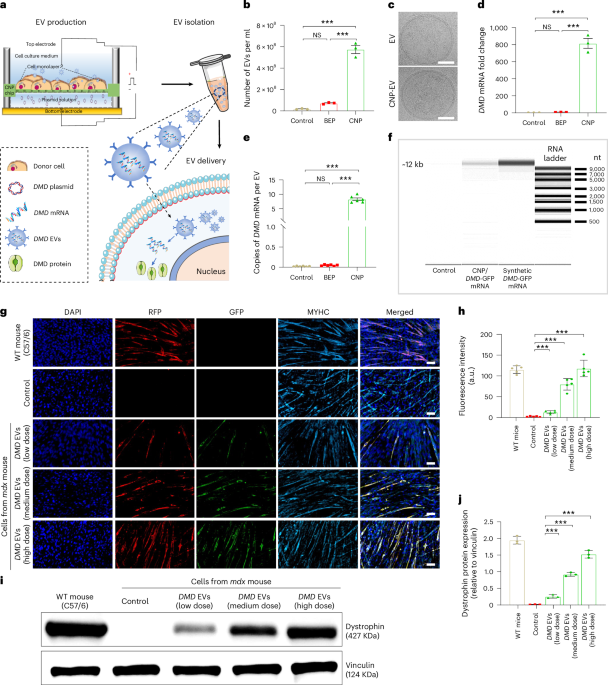
Duchenne muscular dystrophy (DMD) is a genetic disorder caused by mutations in the dystrophin gene, leading to progressive muscle degeneration and weakness. Current treatments focus on symptom management, with no cure available. Researchers have been exploring alternative approaches to restore dystrophin expression and improve muscle function. One such approach involves the use of messenger RNA (mRNA) encoding the full-length dystrophin protein. In this study, scientists employed engineered extracellular vesicles to deliver a skeletal-muscle-targeted DMD mRNA to mice with a DMD model. The goal was to restore dystrophin expression and improve muscle function. The results showed that the systemic delivery of the DMD mRNA using engineered extracellular vesicles effectively restored full-length dystrophin expression in the skeletal muscle of the mice. This improvement was accompanied by enhanced muscle function, as measured by various physiological parameters. The study demonstrates the potential of non-viral delivery methods for treating DMD, offering a promising avenue for future research. However, it is essential to note that this research is for laboratory use only and should not be attempted in a clinical setting without further testing and validation. The results presented in this study are not intended to be used for human treatment or therapeutic purposes. Researchers should exercise caution and follow established protocols when working with genetically modified organisms and novel delivery methods. Further studies are necessary to fully understand the safety and efficacy of this approach in humans.