
Structural basis of signal peptide recognition by the signal peptidase complex
Signal peptides are highly variable, yet the signal peptidase complex processes them with remarkable specificity. Here, authors combine cryo-EM, molecular dynamics simulations and modeling to reveal a unified binding mec
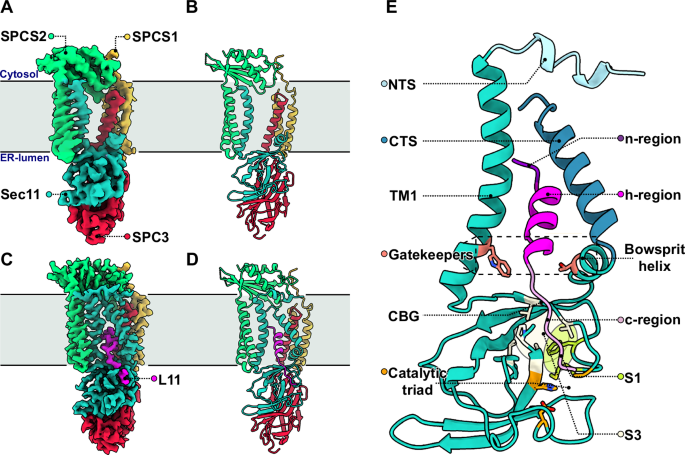
Signal peptides are highly variable, yet the signal peptidase complex processes them with remarkable specificity. This complexity is a subject of ongoing research in the field of protein processing. The signal peptidase complex is responsible for removing the signal peptide from precursor proteins, allowing them to be exported to their target locations within the cell. Understanding how this complex recognizes and processes signal peptides is crucial for elucidating the mechanisms underlying protein secretion and cell signaling pathways. Recent studies have employed a combination of cryo-electron microscopy (cryo-EM), molecular dynamics simulations, and modeling to investigate the structural basis of signal peptide recognition by the signal peptidase complex. These approaches have provided valuable insights into the binding mechanism of signal peptides to the complex. The results of these studies suggest that a unified binding mechanism underlies signal peptide recognition, highlighting the importance of understanding the structural and biochemical properties of signal peptides in this process. Further research is needed to fully elucidate the mechanisms underlying signal peptide recognition by the signal peptidase complex. For laboratory use only, researchers should consult the original publication for detailed information on experimental procedures and data analysis.