
TMEM135 deficiency prevents intestinal lipid accumulation by coordinating lipid uptake and oxidation through ELOVL6-mediated PPARα activation
Intestinal lipid metabolism has a crucial role in metabolic diseases, with transmembrane protein 135 (TMEM135) emerging as a key player in this process. This study reveals that TMEM135 deficiency enhances lipid absorption and utilization in the intestine, addressing the previously unexplored role of TMEM135 in intestinal lipid metabolism. Using CRISPR–Cas9 technology, researchers created TMEM135 K
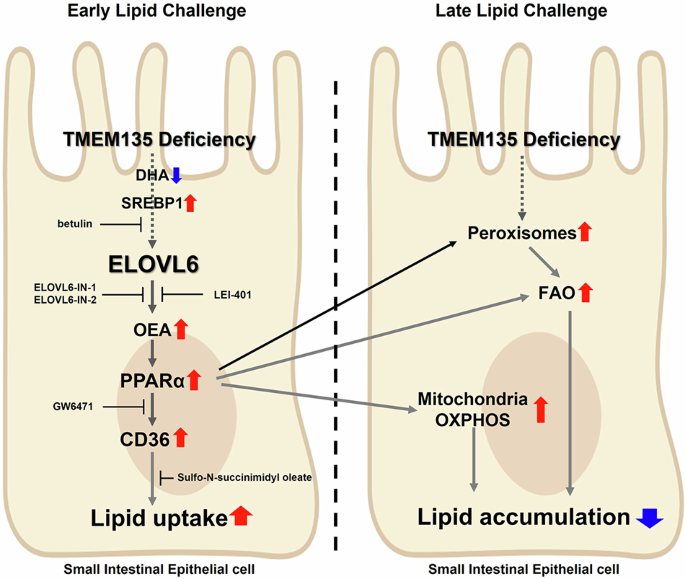
Excessive lipid accumulation impairs digestion and gastrointestinal function. Transmembrane protein 135 (TMEM135) is involved in lipid metabolism of various tissues. Here, TMEM135 deficiency increased intestinal lipid absorption through ELOVL6-dependent oleoylethanolamide production and subsequent activation of peroxisome proliferator-activated receptor alpha (PPARα), which upregulated CD36 at the plasma membrane in the intestine of mice fed a high-fat diet or lard oil. Despite this enhanced lipid uptake, long-term lipid accumulation was suppressed by elevated peroxisomal and mitochondrial β-oxidation through increased fatty acid oxidation and oxidative phosphorylation activities without chylomicron secretion in TMEM135-depleted intestine. Inhibition of PPARα or ELOVL6 attenuated these effects. Furthermore, consistent results were observed in both TMEM135 KO and intestine-specific TMEM135iKO mice, confirming tissue-specific rather than systemic effects. Overall, these results provide insight into the role of TMEM135 as a regulatory node connecting intestinal lipid absorption and systemic energy expenditure, contributing to the coordination between lipid storage and oxidation during metabolic adaptation.