
Uncovering the role of chromatin organization and dynamics in heart disease
Two studies published in Science explore how 3D chromatin organization and structure can influence cardiac development and promote heart failure.
Thank you for visiting nature.com. You are using a browser version with limited support for CSS. To obtain the best experience, we recommend you use a more up to date browser (or turn off compatibility mode in Internet Explorer). In the meantime, to ensure continued support, we are displaying the site without styles and JavaScript.
Two studies published in Science explore how 3D chromatin organization and structure can influence cardiac development and promote heart failure. A greater understanding of cell-type-specific 3D genome organization could help to pinpoint the structural defects underlying heart failure or congenital heart disease, paving the way for highly targeted therapies.
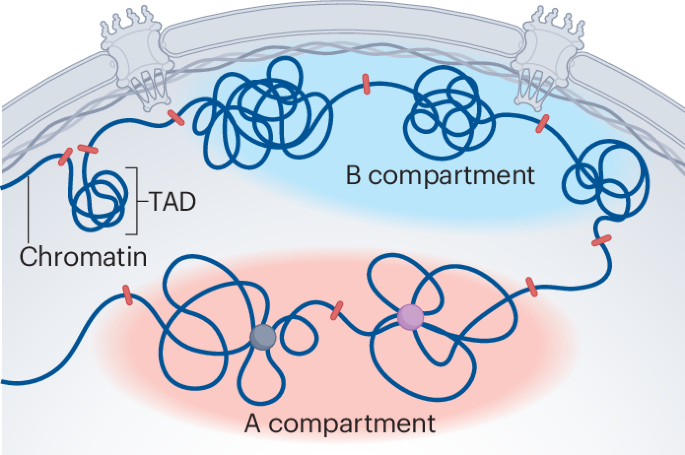
First, the investigators found that TBX5 has a role in establishing chromatin loops in a cardiomyocyte-specific manner, underscoring the involvement of this transcription factor in regulating cardiac-specific 3D chromatin structure. TBX5 also promoted 3D chromatin reorganization in a dose-dependent manner, by regulating the switching between active (A) and repressive (B) compartments during cardiac differentiation. Furthermore, a reduced dose of TBX5 resulted in alterations in the organization of topologically associating domains (TADs) within the cardiomyocyte genome. Given that TBX5 binding to DNA was enriched in chromatin loops, the investigators sought to determine whether cardiomyocyte-specific depletion of TBX5 would alter chromatin loop formation in these cells. Compared with a dose reduction in TBX5, acute depletion of TBX5 resulted in fewer A–B compartment switches and fewer alterations in TAD boundaries, but induced changes in 32% of chromatin loops. Despite the overall preservation of chromatin contacts, some chromatin loops were weakened, indicating an early role for TBX5 in chromatin contact formation and a later role in the maintenance of loop strength.