
Untitled
Gestational diabetes mellitus (GDM), a prevalent prenatal metabolic disorder characterized by hyperglycemia occurring in approximately 9.2% of pregnancies globally, imposes significant cardiovascular risks on offspring, including developmental cardiac hypertrophy and long-term functional impairment. Despite its clinical importance, the molecular mechanisms governing GDM-induced cardiac malformatio
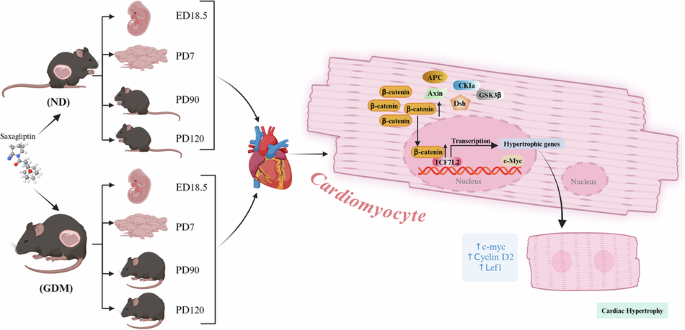
Gestational diabetes mellitus (GDM), a prevalent prenatal metabolic disorder characterized by hyperglycemia occurring in approximately 9.2% of pregnancies globally, imposes significant cardiovascular risks on offspring, including developmental cardiac hypertrophy and long-term functional impairment. Despite its clinical importance, the molecular mechanisms governing GDM-induced cardiac malformations remain elusive.
This study aimed to delineate the regulatory role of the Wnt/β-catenin/Tcf7l2 signaling pathway in mediating pathological cardiac remodeling in GDM-exposed offspring through experimental manipulation using a clinically relevant murine model.
We established a clinically relevant GDM mouse model exhibiting key metabolic features including hyperinsulinemia and impaired glucose tolerance, which faithfully recapitulates human GDM pathology. Cardiomyocyte-specific β-catenin knockout and cardiomyocyte-specific overexpression of constitutively active β-catenin were employed for genetic manipulation. Pharmacological intervention was performed using saxagliptin, a clinically approved DPP-4 inhibitor. Cardiac phenotypes were evaluated by histopathological analysis, echocardiography, and molecular assessments of Wnt/β-catenin pathway activity and hypertrophic markers.
Histopathological and echocardiographic analyses revealed pronounced cardiac hypertrophy in GDM-exposed offspring, concomitant with activation of the Wnt/β-catenin/Tcf7l2 pathway in myocardial tissues. Functional studies demonstrated that cardiomyocyte-specific β-catenin ablation attenuated GDM-induced hypertrophic remodeling, whereas constitutive β-catenin overexpression exacerbated cardiac dysfunction. Importantly, pharmacological intervention with saxagliptin significantly ameliorated cardiac hypertrophy in GDM-offspring. This therapeutic effect was paralleled by marked suppression of Wnt/β-catenin signaling activity and reduced expression of ANP.