
Computational Design of Antimicrobial Peptide Nanopores
A computational de novo design framework enables the design of α-helical peptides that assemble into transmembrane barrel-stave pores (TBPs). Here, TBPs are designed for antimicrobial activity, with broader potential app
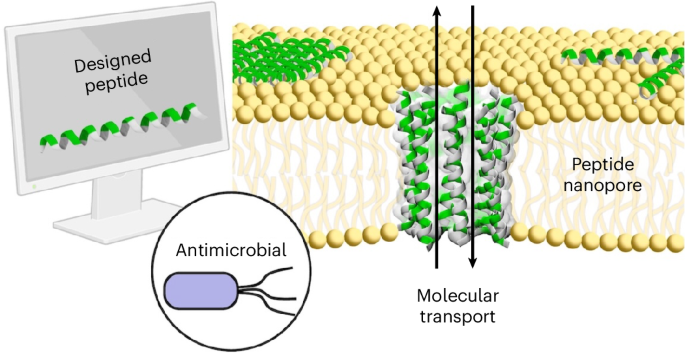
Recent advances in bioinformatics have facilitated the computational de novo design of α-helical peptides capable of self-assembly into transmembrane barrel-stave pores (TBPs). This framework utilizes predictive algorithms to model peptide interactions within lipid bilayers, ensuring structural stability and functional integrity. By optimizing amino acid sequences at the molecular level, researchers can engineer TBPs with specific pore diameters and hydrophobicity profiles tailored for biological membranes.
The primary application of these computationally designed peptides lies in their antimicrobial activity. Unlike conventional antibiotics that target essential cellular processes, these engineered pores disrupt membrane integrity through physical disruption, leading to rapid cell lysis. This mechanism reduces the likelihood of resistance development compared to traditional small-molecule inhibitors. Studies indicate that specific sequence variations can enhance selectivity for bacterial membranes while sparing eukaryotic cells.
Beyond antimicrobial applications, these TBPs hold significant promise for nanopore sensing technologies. The precise control over pore geometry allows for the detection of single molecules and nucleic acids with high resolution. In drug delivery systems, engineered pores can facilitate the translocation of therapeutic agents across biological barriers, potentially overcoming limitations associated with passive diffusion or endocytosis.
Future research directions include expanding the design space to incorporate additional functional domains, such as enzymatic activity or ligand-binding capabilities. While computational models provide robust predictions, experimental validation remains critical for confirming in vivo efficacy and biocompatibility. The integration of machine learning with structural biology continues to refine these design protocols, accelerating the translation of theoretical models into practical laboratory tools.
This research is intended strictly for laboratory use only. These peptides are not approved for clinical or therapeutic applications. All experiments must be conducted under appropriate biosafety guidelines and institutional review board oversight.